Research Software and Environmental Research in Asia
This blog post summarises the second episode of the Research Software and NRENs in Asia series, featuring a conversation with Dr. Veerachai Tanpipat, Senior Expert at the Hydroinformatics Institute, Thailand.
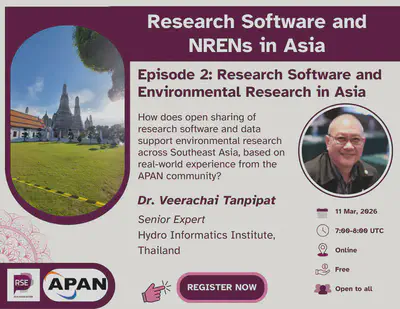
Asia has a rapidly growing research ecosystem, but the research software community remains relatively scattered. By connecting people across institutions and countries, this series helps build awareness of how research software, infrastructure, and open science practices intersect. The series also highlights how NRENs play a critical role in enabling large-scale research collaboration, particularly in data-intensive fields like environmental science.
The second episode of the Research Software and NRENs in Asia community conversation series brought together researchers, research software practitioners, and infrastructure experts to explore how research software supports environmental research across Asia. This series is organised by the RSE Asia Association in collaboration with the Asia Pacific Advanced Network (APAN) as part of their Memorandum of Understanding (MoU) activities.
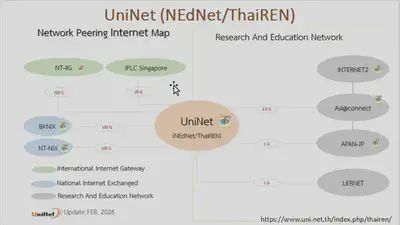
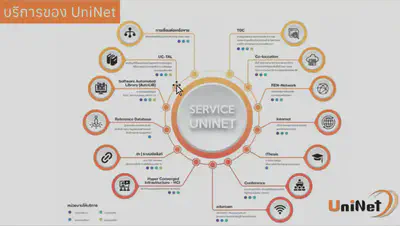
The session featured Dr Veerachai Tanpipat (also known as Chai), Senior Expert at the Hydroinformatics Institute in Thailand and chair or co-chair of several APAN Working Groups (WGs). This includes being the Chair of the Open Science Collaborative and Resource WG, and a co-chair of the Agriculture WG and the Disaster Mitigation WG. The discussion focused on environmental data sharing, disaster mitigation, the role of research software, and the challenges of building sustainable research infrastructure in a diverse region like Asia. The Agriculture WG focuses on using technology to support sustainable food production across the Asia-Pacific region. He emphasised how each of these is interrelated, and that in order to solve the problems in any of these areas, the researchers, as well as the software developer, should gain an understanding of the different disciplines. The APAN is a long-standing collaboration of the NRENs across the Asia-Pacific region. While the network infrastructure itself is critical, Dr. Tanpipat emphasised that applications built on top of these networks are increasingly important. Today, research collaborations depend not only on connectivity but also on software, data systems, and collaborative tools. He also highlighted how national-level infrastructures such as Thailand’s UniNET and ThaiREN play a crucial role in connecting local research institutions to the broader the APAN ecosystem, enabling both domestic and international collaboration.
Disaster mitigation and environmental data collaboration
One of the most interesting parts of the discussion centred on the Disaster Mitigation working group. Asia experiences frequent environmental disasters, including floods, typhoons, earthquakes, wildfires, and tsunamis. To respond effectively, researchers must combine data from multiple sources, including satellite imagery, remote sensing data, ground sensors, weather models, and hydrological measurements.
Historically, remote sensing data has been extremely large and difficult to move across networks. However, modern NREN infrastructure now allows large datasets to be transferred quickly for analysis.
Additionally, these working groups often collaborate with organisations such as Japan’s National Institute of Informatics (NII), which supports data infrastructure and capacity building, particularly in areas like research data management and library integration.
International initiatives also support these efforts. For example, the Copernicus programme funded a satellite data centre in the Philippines to support environmental monitoring across ASEAN countries. The second phase of the project will focus more heavily on applications and data analysis, rather than simply building infrastructure.
Similarly, high-performance computing infrastructure such as that supported by the Korea Institute of Science and Technology Information (KISTI) provides computational resources for ASEAN environmental research at the National Research and Innovation Agency (BRIN).
Beyond these, disaster response and data sharing efforts are also closely linked with global initiatives and organisations such as UN-SPIDER, UNESCO, CODATA, the European Space Agency (ESA), the European Centre for Medium-Range Weather Forecasts (ECMWF), NASA, and the European Grid Infrastructure (EGI), which contribute data, frameworks, and coordination for cross-border disaster response and environmental monitoring.
These collaborations enable near-real-time processing of disaster data across international research networks.
The role of research software
A central theme of the conversation was the role of research software in environmental research.
Environmental science increasingly depends on software systems that process large satellite datasets, integrate multiple data sources, run predictive models, and generate dashboards for decision makers.
Dr Chai highlighted that many scientists understand the scientific models but may not have the programming expertise to build robust software systems. This creates a strong need for collaboration between domain scientists and software engineers.
In some projects, computer science students from France have helped implement web applications for operational use by government agencies and NGOs. These applications can support activities such as wildfire monitoring or flood forecasting which is looked after by the National Hydroinformatics Centre of Thailand.
However, sustainability remains a major issue. A recurring problem is a lack of documentation. When students or short-term contributors leave a project without proper documentation, the software becomes difficult to maintain or extend.
This challenge highlights the importance of good software engineering practices in research.
The critical importance of data quality
Another key takeaway from the session was that data quality is the foundation of reliable environmental research.
Dr Tanpipat summarised this with a familiar principle:
“Garbage In, Garbage Out, GIGO."
No matter how sophisticated an algorithm may be, poor input data will produce unreliable results.
Environmental datasets often come from multiple sources, such as satellite sensors, ground monitoring stations, citizen science contributions, and IoT sensors.
Each source has different levels of accuracy. For example, low-cost air-quality sensors may cost USD 20-30, while high-precision instruments can cost hundreds or thousands of dollars.
When researchers combine these datasets without understanding the differences in measurement accuracy, the resulting analysis can be misleading.
Challenges in data sharing and open science
Despite growing interest in open science, sharing research data remains difficult.
Researchers often hesitate to share their datasets for several reasons like the fear that others may publish different results using the same data, concerns about sensitive or confidential information, Institutional or national policies restricting access, Lack of incentives for sharing data, and the effort required to prepare data for sharing (e.g., cleaning, documentation).
These concerns create barriers to implementing FAIR data principles (Findable, Accessible, Interoperable, Reusable).
Dr Chai noted that funding agencies are increasingly requiring researchers to upload their datasets to public repositories. However, cultural change takes time, and many institutions are still adapting to these expectations.
He also noted that collaborations with international bodies and frameworks - such as those supported by UNESCO and CODATA - are helping to push forward conversations around standards, metadata, and interoperability, even though adoption remains uneven across regions.
AI, synthetic data, and research integrity
The discussion also touched on the role of AI and generative technologies in environmental research.
AI can help to generate synthetic datasets for testing models, accelerate code development, and Support predictive modelling.
However, there are also risks. AI-generated data may appear realistic, but could contain inaccuracies or fabricated information.
For this reason, researchers must clearly document the origin of their data, whether AI was used to generate or modify datasets, the limitations of the data.
Metadata and documentation are essential for maintaining trust in research outputs.
Skills for future researchers and research software engineers
For early-career researchers interested in working at the intersection of environmental science and research software, several skills are particularly valuable.
1. Strong programming skills
Researchers should develop the ability to write efficient and maintainable code.
2. Cross-disciplinary understanding
Software engineers working in environmental research must understand the scientific context behind their tools.
For example, understanding hydrology, forestry, weather systems, and GIS and remote sensing helps developers design better tools for real-world applications.
3. Systems thinking
Environmental systems are complex and interconnected. Researchers must develop the ability to connect information across disciplines.
4. Continuous learning
Environmental research evolves rapidly, and researchers must constantly update their knowledge.
Looking ahead
The session highlighted both the opportunities and challenges in building sustainable environmental research infrastructure in Asia.
Key priorities include:
- Improving access to high-quality environmental data
- Encouraging open science practices
- Strengthening collaborations between scientists and software engineers
- Investing in sustainable research software development
- Building cross-disciplinary skills among researchers
Environmental challenges such as climate change, extreme weather, and natural disasters will only grow in importance in the coming decades. Addressing them requires strong collaboration across countries, disciplines, and technologies.
As Dr. Chai concluded during the session:
We are in different boats, but we are in the same storm.
Collaboration across the Asia-Pacific research ecosystem will be essential for building resilience and developing sustainable solutions.
Participate in the RSE Asia landscape survey
To better understand the state of research in software engineering across the region, the RSE Asia Association has launched a landscape survey. The survey aims to collect insights about career paths, challenges, and opportunities for research software professionals in Asia.
The survey is open until 31 March, and participants will be entered into a raffle for a £10 prize.
What’s next?
In April, we will have a Community Webinar that features Mohamad Mostafa, Community Specialist, DataCite, UAE.
Meanwhile, RSE Asia encourages community members to:
Participate in the ongoing research software landscape survey in Asia, which is open until 31st March 2026. You also stand a chance to win a cash prize of £10 for 5 participants based on a raffle.
Register for the community webinar on Connecting Research Software to the Scholarly Record with DataCite, where we welcome Mohamad Mostafa, Community Specialist, DataCite, UAE, with whom we will discuss how DataCite’s open PID infrastructure and rich metadata support the persistent identification and discoverability of research software.
Join the RSE Asia Community Membership to get the latest news.
Follow RSE Asia on LinkedIn for updates and opportunities.
Resources:
If you were not able to join the meetup live or would like to revisit it, the video recording of the episode is coming soon. Throughout the meetup, the guest, the facilitators, and the participants shared a bunch of useful resources for the community for shared progress. We have compiled it in the form of a Resource Sheet. Definitely, check it out!
Resource sheet: Zenodo link coming soon!
Learn more about us
If you have any questions about, please reach out to us at: rse.asia.association@gmail.com. For more information and to join upcoming events, visit:
- Website: https://rse-asia.github.io/RSE_Asia/
- For the latest news, events, activities, and opportunities, follow us on our LinkedIn page
- To join the RSE Asia community, please fill out our short Community Membership Form